Proscenium vs. Thrust vs. In-the-Round: How Stage Layout Changes the Audience Experience
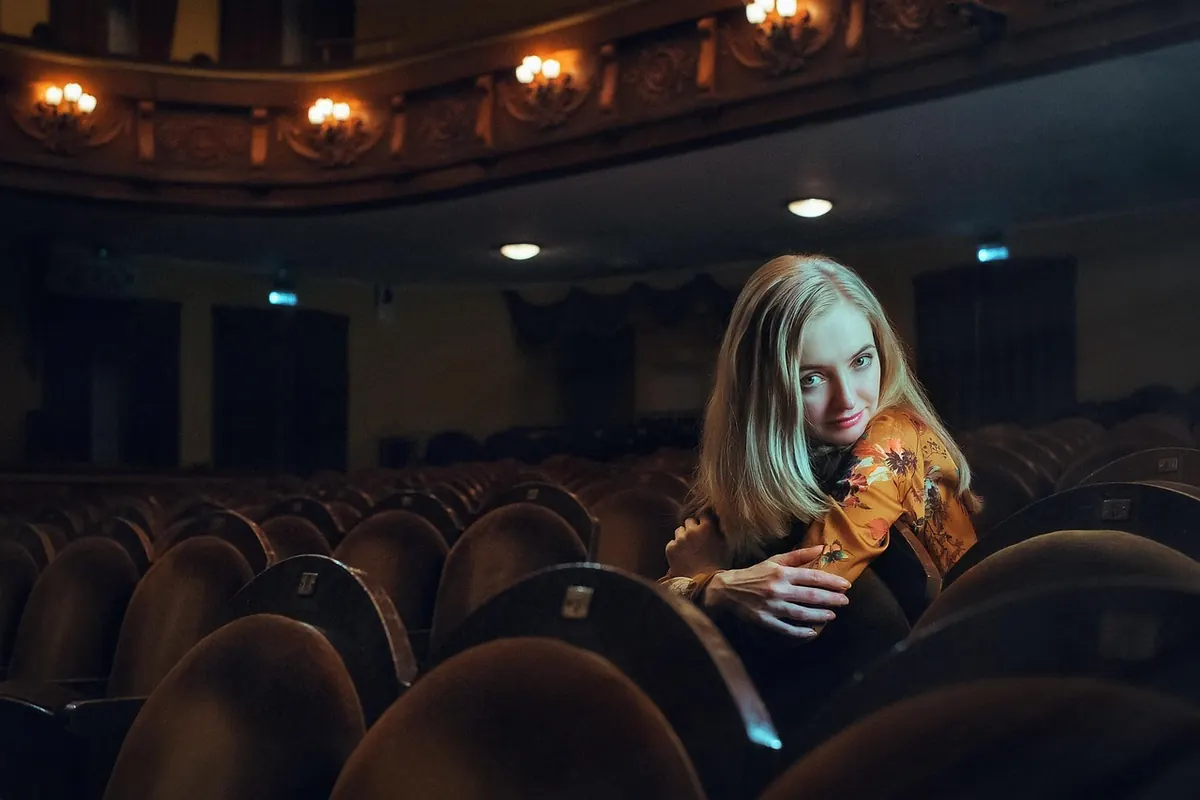
Walk into a theatre before the house lights go down and the room tells you something. In a proscenium house you look straight ahead at a framed world, and the world waits behind a curtain. In a thrust, the stage reaches out at you and half the audience is watching the other half. In the round, there is no wall to hide behind at all — the actors enter through the same aisles you walked down.
None of these shapes is better. They are different tools, and each one solves some problems while creating others. What follows is a working comparison: what each configuration does to sightlines, to staging, and to the odd, unspoken contract between performers and the people watching.
The proscenium is the picture-frame stage: a wall with a large opening, a curtain that opens and closes, and an auditorium that faces it head-on. It is the default in most opera houses, in commercial West End and Broadway theatres, and in the civic playhouses built across Europe in the nineteenth century.
Its greatest gift is control. The frame conceals wings, flies and scene changes; it lets a design team build a complete room, a forest, a ship. Spectacle is easier here than anywhere else. Because every seat faces roughly the same direction, the director can compose images — a table, a doorway, a body on the floor — and trust that most of the audience will read them the same way.
The trade-off is distance, both physical and emotional. The front rows may be close, but the balcony is far, and the actor must project to reach it. Blocking tends to keep performers open and angled slightly outward, and the deep upstage corners become dead zones where a face disappears. The fourth wall is an assumption baked into the architecture: the audience watches, the actors pretend not to notice.
Seat quality also varies more sharply here than in any other layout. The front centre is glorious; the extreme sides of the stalls can lose up to a third of the stage. If you are choosing seats, ask the box office directly which seats lose the upstage corners — most will tell you honestly.
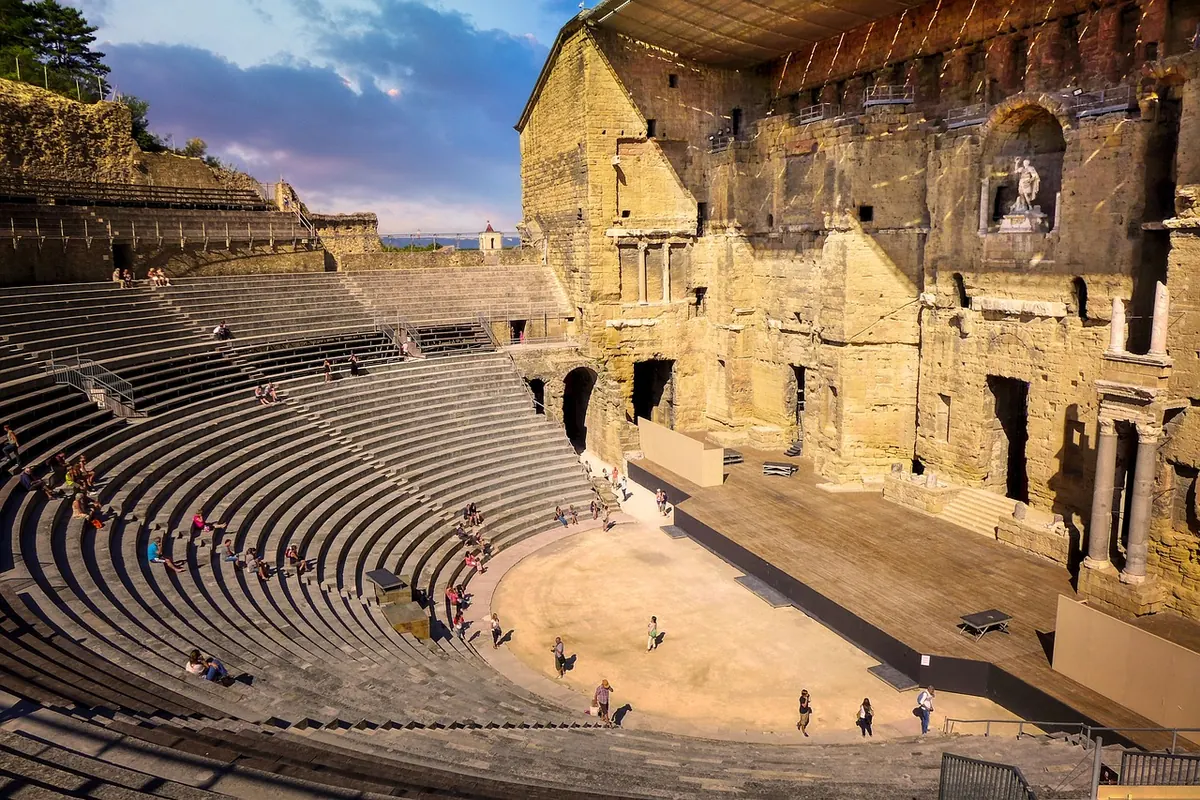
A thrust pushes the playing area out into the auditorium, so the audience wraps around the front and both sides. Shakespeare's Globe is the famous modern example, and the shape is older than the proscenium by centuries: Greek and Roman amphitheatres wrapped their audiences around the action rather than framing it.
The effect is immediate and social. An actor standing at the front of a thrust is genuinely in the middle of the crowd, and can look at one person, then another. Speeches to the audience — soliloquies, asides, direct address — feel natural here in a way they rarely do behind a frame.
Three-sided seating creates a moving target. A moment that reads beautifully to the centre block may be a back view for the side banks. Directors therefore work in constant rotation: cross the stage, turn, plant, speak, turn again. Long static scenes need careful choreography or one section of the house gets a shoulder blade for ten minutes.
Scenery is limited too. Anything tall blocks a view, so thrust productions lean on lighting, costume, a few strong objects and, above all, language. Entrances are long — an actor may walk forty feet in full view — which means entrances become events and must be rehearsed as such. It rewards a company that can hold a room without help.
In the round, the audience surrounds the stage on all four sides. There is no backdrop, no wings, no upstage. Companies such as those working in arena theatres in Scarborough and New York built their reputations on it, and it remains the most honest, least forgiving layout in the building.
Every seat is a good seat in one sense — nobody is more than a few rows from the action — and every seat is a bad seat in another, because someone is always looking at the back of someone's head. The compensations are considerable: the audience sees each other, laughter spreads across the room, and the shared act of watching becomes part of the evening.
Staging rules tighten fast. Blocking must keep at least a suggestion of openness to all four quadrants; actors cross in curves rather than straight lines, and scenes are often staged low, so that raised arms do not cut the space in half. Scenery is minimal by necessity — a chair, a table, a rug — and lighting does the work of place and mood. Entrances happen through aisles, which means the audience is inside the fiction from the first moment.
Sightlines are not a technical detail left to the production manager. They are a dramaturgical constraint, and good directors design around them from the first day of rehearsal.
There is a useful discipline here: if a scene only works from one privileged position, it does not yet work.
People often assume the round is the most intimate configuration because nobody is far away. In practice, intimacy comes from focus. A proscenium can be devastatingly intimate when a single actor stands downstage and speaks quietly, and a big theatre in the round can feel oddly public when four rows of faces watch each other react.
What changes most is the audience's role. Behind a frame, you are a witness. On three sides, you are a guest at something happening in the room. Surrounded, you are part of the assembly — visible, audible, implicated. Comedy tends to gain from that; certain kinds of naturalistic drama lose the privacy they need to breathe. Match the shape to the script's temperature, not to fashion.
The room is part of the production. Choose its shape deliberately, then let that choice shape everything else — where actors stand, where they turn, and how close the audience is allowed to feel.
Photo: fietzfotos / Pixabay
Previous Post
Opening Night Backstage Checklist: 15 Things to Confirm Before Curtain Up
Next Post
First-Time Festivalgoer's Guide to Edinburgh Fringe Theatre: Tickets, Venues, and Timing